What Is an Outbound Call? Meaning, Types & Examples
Outbound Calls: The Short Answer
An outbound call is a phone call your business or its agent places to a prospect or customer, rather than one you receive. Teams make outbound calls to sell, generate and qualify leads, follow up, run research, and proactively support customers. The outbound call meaning is simple: you start the conversation instead of waiting for it.
- Who initiates it: your business places the call, not the customer.
- Why teams use it: sales, lead generation, follow-ups, market research, proactive support, and collections.
- Inbound vs outbound: inbound calls come to you; outbound calls go out from you.
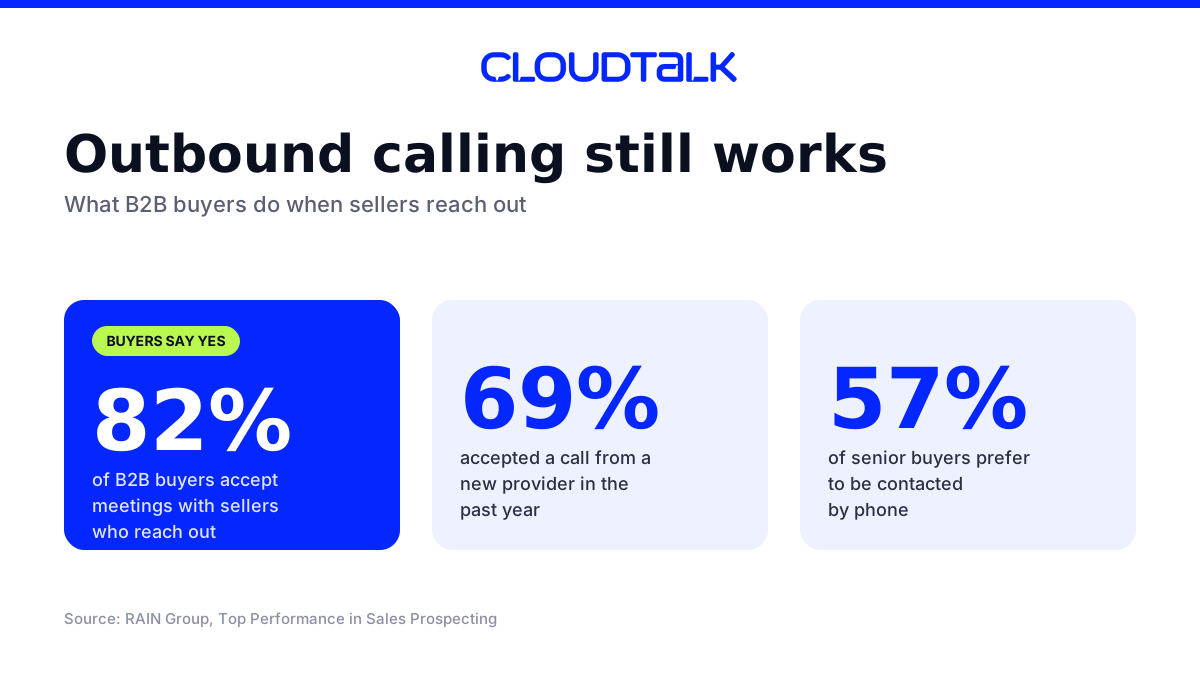
- It still works: 82% of B2B buyers accept meetings with sellers who reach out (RAIN Group).
- Compliance is required: outbound programs must follow TCPA, Do Not Call, and where relevant GDPR and HIPAA rules.
See how outbound teams reach more contacts with CloudTalk

What Is an Outbound Call?
An outbound call is a phone call initiated by a business or a contact center agent to reach a prospect, customer, or other contact. It is the opposite of an inbound call, which the customer makes to you. With outbound calls, your team decides who to reach, when, and why, whether the goal is to book a meeting, qualify a lead, confirm an appointment, or check in before a renewal.
The reputation of outbound calling has not caught up with the data. It is easy to picture a scripted robocall interrupting dinner, but that is one narrow, and heavily regulated, slice of the channel. Most outbound calling is deliberate, researched, and welcome: 82% of B2B buyers accept meetings at least occasionally with sellers who reach out, 69% accepted a call from a new provider in the past year, and 57% of senior buyers say they prefer to be contacted by phone, according to RAIN Group research on sales prospecting. The problem was never the phone. It is whether the call is relevant.
Inbound vs Outbound Calls: What's the Difference?
The core difference between inbound and outbound calls is who starts the conversation. In an outbound call, your business reaches out, usually to sell, qualify, or follow up. In an inbound call, the customer reaches you, usually to buy, ask a question, or get support. Most teams run both, but they serve different goals and use different tools.
| Feature | Inbound Calls | Outbound Calls |
|---|---|---|
| Who initiates the call | The customer | Your business or agent |
| Primary goal | Resolve a request or question | Start a conversation: sell, qualify, follow up |
| Typical use | Support, billing, inquiries | Sales, lead generation, research, retention |
| Common tools | IVR, ticketing, CRM | Auto-dialers, CRM, call scripts |
| Team | Support and customer service reps | Sales reps, SDRs, telemarketers |
| Success metric | CSAT, first-contact resolution | Connect rate, conversions, pipeline |
Types of Outbound Calls
Outbound calling is not only for sales. Teams across the business use outbound calls to drive revenue, gather insight, and keep customers close. These are the most common types.
- Sales and prospecting calls — reaching cold or warm leads to open new opportunities, plus upsell and cross-sell calls to existing customers.
- Lead qualification and marketing calls — gauging interest and routing the best-fit prospects to sales before a rep spends time closing.
- Market research and survey calls — collecting feedback and testing messaging directly with customers.
- Proactive customer service calls — flagging an outage, change, or follow-up before the customer has to ask.
- Appointment setting and reminders — booking, confirming, and rescheduling, common in healthcare, legal, and real estate.
- Collections calls — recovering overdue payments while staying professional and compliant.
Outbound Call Examples
A few everyday examples make the outbound call definition concrete:
- An SDR calls a lead who downloaded a pricing guide to book a product demo.
- A customer success manager calls 30 days before renewal to head off churn.
- A clinic calls patients to confirm next-day appointments and cut no-shows.
- A research team calls churned customers to learn why they left.
- A finance team calls a customer about an overdue invoice.
Benefits of Outbound Calling
A well-run outbound calling strategy does more than fill a pipeline. It puts your team in control of the conversation and creates touchpoints no other channel can match.
- Direct, personal conversations — a live voice handles objections and context that email cannot.
- Faster lead generation and qualification — reps qualify in real time and focus on high-intent prospects.
- Immediate feedback — outbound calls surface objections, pricing reactions, and market signals on the spot.
- Stronger retention — proactive check-ins reduce churn before problems escalate.
- Scale without the cost — outbound reaches large segments at a fraction of in-person outreach.
Outbound Calling Best Practices
The difference between outbound calling that works and outbound calling that annoys comes down to preparation, the right tools, and staying inside the rules.
- Use a script as a flexible guide — a good call script gives structure without sounding robotic.
- Define the goal and the list first — know whether the call is for a meeting, a renewal, or research before you dial.
- Sync everything to your CRM — connect calling to Salesforce, HubSpot, or Pipedrive so every call logs itself.
- Automate dialing — a power dialer or smart dialer removes manual dialing so reps spend time talking, not typing.
- Track the right metrics — use real-time analytics to watch connect rates, talk time, and conversions, then coach from the data.
- Stay compliant — keep Do Not Call lists current and log consent before any campaign.
Reach more contacts in less time
Is Outbound Calling Legal? Rules and Compliance
Outbound calling is legal, but it is one of the more regulated forms of business outreach, and the rules carry real penalties. This is not legal advice, but any outbound program should account for the following.
- TCPA (US) — the Telephone Consumer Protection Act governs consent, calling hours, and the use of automated dialing and prerecorded messages.
- Do Not Call Registry — scrub your lists against the National DNC Registry, plus any state and internal opt-out lists.
- GDPR (EU/UK) — when you call EU or UK contacts, you need a lawful basis for processing their data and a way to honor opt-outs.
- HIPAA (US healthcare) — calls that touch protected health information need a HIPAA-compliant setup.
Outbound Calling Software and Tools
The right stack turns outbound calling from a numbers grind into a system. A few categories do most of the heavy lifting:
- CRM integration — two-way sync gives agents context and logs calls automatically.
- Conversation intelligence — transcripts, summaries, and sentiment remove post-call busywork.
- Call recording and analytics — recording and reporting power coaching and compliance.
- Workflow automation — automated follow-ups like voicemail drop and scheduled callbacks keep cadences consistent.
How CloudTalk Powers Outbound Calling
CloudTalk is a cloud-based business phone system built for outbound teams, with local numbers in 160+ countries and used by 4,000+ businesses worldwide. It brings dialers, AI conversation intelligence, and CRM sync into one place, so reps spend their time in conversations instead of admin. G2 reviewers rate CloudTalk 4.4/5.
Pricing starts at $25/user/month billed annually, with a 14-day free trial and no credit card required. Compare plans on the CloudTalk pricing page.
Join 4,000+ teams already calling smarter with CloudTalk
Sources
- RAIN Group, Top Performance in Sales Prospecting research — rainsalestraining.com
- Federal Trade Commission, Telemarketing Sales Rule — ftc.gov
- Federal Communications Commission, TCPA and robocall rules — fcc.gov
- National Do Not Call Registry — donotcall.gov
FAQs: Outbound Calls
An outbound call is a phone call a business or its agent places to a prospect or customer, rather than one it receives. Teams use outbound calls for sales, lead generation, follow-ups, research, and proactive support.
An inbound call is one the customer makes to your business, usually for support or to buy. An outbound call is one your business makes to a customer or prospect, usually to sell, qualify, or follow up. The difference is who starts the conversation.
In a call center, outbound calling is when agents place calls out to contacts from a list, often with a dialer, for sales, lead generation, surveys, or appointment setting. It is the proactive counterpart to inbound support work.
Yes, when calls are relevant and well-timed. RAIN Group research found 82% of B2B buyers accept meetings with sellers who reach out, and 69% accepted a call from a new provider in the past year. Effectiveness comes from targeting and follow-up, not volume alone.
It varies by industry and call length, but many outbound agents make roughly 40 to 100 calls a day. Dialer automation raises that number by removing manual dialing and skipping unanswered calls.
Yes, but they are regulated. In the US, the TCPA governs consent and automated dialing, and lists must be scrubbed against the National Do Not Call Registry. Calls to EU contacts fall under GDPR, and healthcare calls under HIPAA.