2026's Top 11 Cloud-Based Telephony Solutions: Your Ultimate Guide
SUMMARY:
We’ve reviewed and tested 30+ cloud-based calling platforms to find the best cloud telephony provider for every business size, from budget-friendly options to enterprise-grade solutions with AI and global coverage. Discover the top outbound dialers built to boost productivity, automate workflows, and help you close more deals.
Here are our top 11 cloud telephony companies:
How We Chose the Best Cloud Telephony Software
To create this guide, we assessed 30+ leading cloud-based telephony platforms, combining direct product testing with insights from over 2,000 professionals via trusted review sites like G2, Capterra, and TrustRadius.
The 11 best cloud telephony services were selected based on call quality, feature depth, CRM integrations, global coverage, ease of use, pricing transparency, customer support quality, scalability, and user satisfaction scores. We also cross-checked industry benchmarks and real user discussions from Reddit and Quora to ensure every recommendation is grounded in real-world experience.
What You'll Find Inside:
Only cloud telephony platforms that drive measurable results — plus clear guidance on which types of teams and use cases each one suits best.
Why Trust Our Software Reviews?
For nearly a decade, we've helped more than 30,000 professionals choose and implement better communication tools. Along the way, we've worked closely with experts across customer support, sales, and operations — listening to their challenges and following market trends.
To support better software decisions, we've reviewed over 200 software tools across industries. In the process, we've analyzed 5,500+ verified customer reviews from platforms like G2, Gartner, Capterra, and TrustRadius, plus real discussions on Reddit and Quora.
In the last year alone, we published over 1,000 articles — each one written by humans for humans, with care and a deep understanding of our customers' needs. The reviews are based on trustworthy data, with one clear goal: to provide reliable insights and answers for you.
Learn how we keep our content integrity and our software review methodology.
What Is Cloud Telephony?
A cloud-based telephony solution is a phone system that runs over the internet instead of using traditional phone lines or hardware. That means your team can make and receive calls from anywhere — on a laptop, desktop, or mobile device — as long as there's an internet connection.
Unlike legacy PBX systems that require bulky on-site equipment, cloud telephony is hosted by a provider and managed online, which reduces IT headaches and upfront costs.
And since everything is cloud-based, updates, security, and backups are handled automatically — so you can focus on your customers, not your phone system.
How Does Cloud-Based Telephony Work?
The system uses VoIP (Voice over Internet Protocol) to transmit the call, turning your voice into digital data and sending it over a secure internet connection. When you make a call or someone calls your business number, it's routed through a cloud server — hosted and maintained by your provider.
Here's how the process works:
- Call initiation: A customer dials your business number from any phone.
- VoIP transmission: The caller's voice is converted into data packets using Voice over Internet Protocol (VoIP) and sent over a secure internet connection.
- Call routing: The cloud system processes call rules, connects the call via PSTN or VoIP networks, and routes it to the destination number.
- Reassembly: The data packets are converted back into an analog voice signal so they can hear the call.
Top Benefits of Cloud-Based Telephony for Businesses
Cloud-based telephony helps your team cut costs, stay flexible, and deliver better service from anywhere. To ensure you select and implement the right cloud calling solution, many businesses partner with trusted cloud consulting services that align telephony with broader cloud strategy. Here's how it powers growth:
- Cut communication costs without compromise: Ditch the hardware and upfront installation fees. Cloud systems run online, so you avoid the cost of servers, maintenance, and IT support.
- Scale your system as you grow: Add or remove users in just a few clicks. Whether you're onboarding new hires or opening a new office, cloud telephony scales with you — no rewiring or equipment upgrades needed.
- Expand globally without extra overhead: Set up local or international phone numbers instantly. Reach new markets and serve customers worldwide, without opening physical offices.
- Access advanced features out of the box: Use smart tools like call recording, analytics, voicemail-to-email, and auto-attendants from day one. Plus, integrate your CRM to keep everything in one place and deliver faster, smarter customer service.
- Deliver faster, smarter customer service: Route calls to the right agent automatically. Add custom greetings or virtual receptionists. Help customers get answers quickly — without bouncing between departments.
- Unify your team's communication: Bring calling, messaging, and video into one cloud-based platform. Streamline collaboration across departments and cut the clutter of disconnected tools.
Key Features You Should Look for in a Cloud Phone System
Make sure your cloud phone system includes these core features to support productivity, customer service, and remote work:
- Call Recording: Call Recording helps you review conversations for training, monitor service quality, and stay compliant with industry regulations.
- Call analytics: Analytics show patterns in call volume, duration, wait times, and more. These insights help you fine-tune staffing, improve workflows, and measure success.
- IVR: An auto-attendant or IVR system greets callers and sends them to the right place fast. No reception desk required — just a smoother experience for everyone.
- Call routing: A modern Call Routing system directs calls based on time of day, caller location, or team availability. This keeps response times low and customer satisfaction high.
- Voicemail: If your team is unavailable, Voicemail ensures customers can still leave a message. You can access voicemails from anywhere — some systems even send them to your email.
- Mobile integration: A good cloud phone system lets employees make and receive calls on their mobile devices, so they can work from home, the office, or on the move without missing a beat.
Cloud Telephony Costs: What You Need to Know
Most cloud phone systems cost between $25 and $35 per user/month, but final pricing can vary based on your team size, feature needs, and call volume.
Several factors influence the total cost:
- User count: More users mean higher overall costs, but many providers offer discounts at scale.
- Feature set: Advanced tools like AI analytics, custom call flows, and integrations can raise the price tier.
- Call volume: High-volume teams may need plans with greater capacity or unlimited minutes.
- Support level: Premium support or dedicated account management may add to the base price.
- Billing cycle: Annual plans typically cost less per month than monthly billing.
Quick Comparison Table of the Best Cloud Calling Services
Top 11 Cloud-Based Telephony Solution Providers in 2026
The VoIP market is projected to grow from $134.86 billion in 2023 to $151.21 billion in 2024 at a compound annual growth rate (CAGR) of 12.1%.
As a result, it's evident that more cloud telephony solutions are emerging in the market each day, making it challenging to choose the right one.
But before we dive into the full reviews, here's a side-by-side comparison of the top cloud-based telephony solutions — so you can quickly spot which platforms align best with your team's communication needs, budget, and growth goals:
1. CloudTalk: Best Cloud Telephony Solution for Growing Businesses
What Is CloudTalk?
CloudTalk kicked off 2026 earning 127 badges from G2, the world's leading software review platform. Based on feedback from more than 1,400 users, these awards highlight CloudTalk's commitment to quality, innovation, and customer success.
With its powerful analytics, seamless CRM integrations, and global coverage, CloudTalk has become the best cloud telephony solution for growing sales and customer service teams aiming to scale efficiently.
What Are CloudTalk's Key Features?
- International Numbers: Acquire international numbers (with geographic or non-geographic codes) from more than 160 countries. Local phone numbers allow customers from abroad to call you at standard local rates or free of charge.
- Call Flow Designer: Customizing your call flow allows you to create a system that perfectly fits your needs. With over 20 routing options, you can design a tailored inbound calling process for your business.
- AI Voice Agent (A.K.A CeTe): Qualifies leads, confirms meetings, sends reminders, gathers feedback, and more — operating 24/7 with real-time escalation to human agents when needed.
- AI Sales Dialer: Dials leads, skips voicemails, connects live calls, logs outcomes — and scales your outbound sales with fewer reps.
- Number porting: Keep your existing numbers and preserve your brand identity by porting numbers from 50 countries, including local, national, mobile, and toll-free options.
What Are CloudTalk's Plans & Pricing?
CloudTalk's pricing includes four plans:
- Lite Plan (from $19 per user/month) — available only in the Americas
- Starter Plan (from $25 per user/month)
- Essential Plan (from $29 per user/month)
- Expert Plan (from $49 per user/month)
Who Is CloudTalk Best For?
SMBs scaling globally — particularly sales and support teams that need AI-powered dialing, real-time analytics, and deep CRM integrations without enterprise-level complexity.
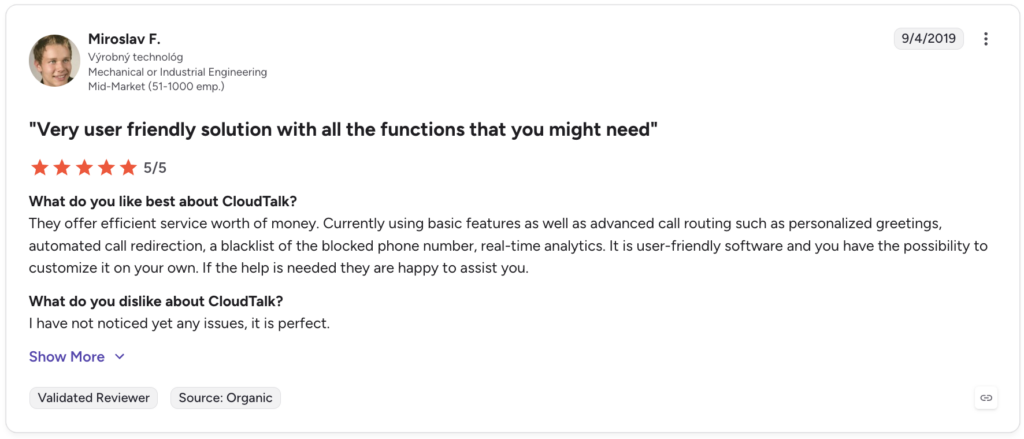
What Are CloudTalk's Customers Saying?
2. RingCentral: Best for Enterprise-Level Communication
What Is RingCentral?
When you think about VoIP telephony solutions, RingCentral is among the first ones that come to mind. It's no wonder the company has been on the market for over 20 years and has built quite a reputation.
What Are RingCentral's Key Features?
- Advanced Analytics and Reporting
- Mobile app
- Call Recording
- Call Routing
What Are RingCentral's Plans & Pricing?
RingCentral pricing includes four plans:
- Core (from $20/user/month)
- Advanced (from $25/user/month)
- Ultra (from $35/user/month)
- Customer Engagement Bundle (Quote-based)
Who Is RingCentral Best For?
Businesses of all sizes — particularly enterprises that need a scalable, feature-rich UCaaS platform with HD voice and video.
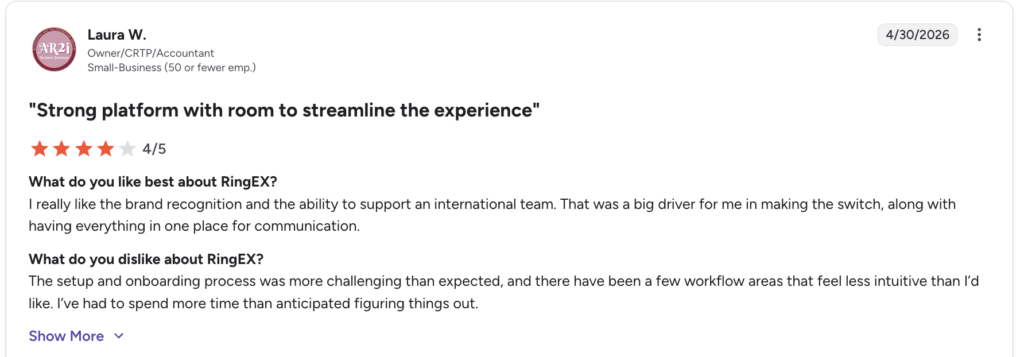
What Are RingCentral's Customers Saying?
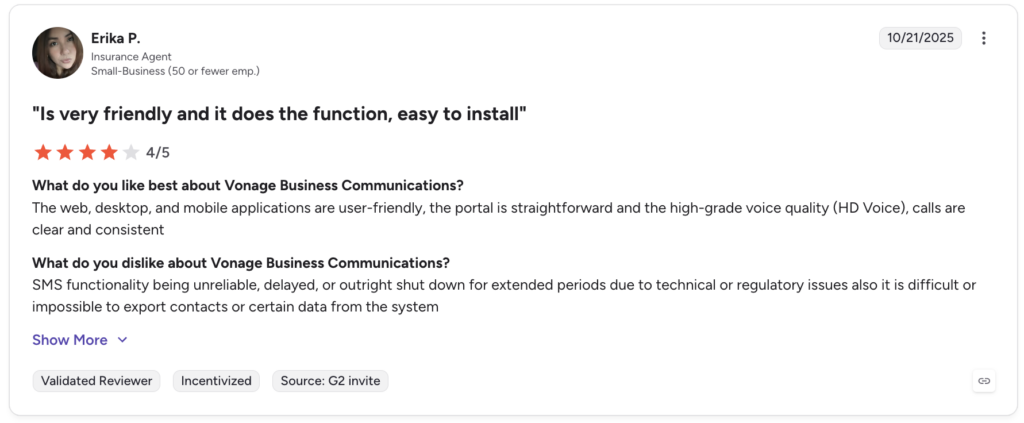
3. Vonage: Best for Established SMEs
What Is Vonage?
Vonage is among the best-known cloud telephony service providers in the world. It has been in the business for over twenty years and has established an enviable reputation as a market leader.
What Are Vonage's Key Features?
- Voicemail to email
- Auto-attendant
- Desktop App
- Voice and video conferencing
What Are Vonage's Plans & Pricing?
Vonage pricing is quote-based. Contact their sales team for a custom package tailored to your team size and requirements.
Who Is Vonage Best For?
Small to medium-sized businesses — particularly effective for companies with at least 20 users that need reliable VoIP with strong routing options.
What Are Vonage's Customers Saying?
4. Zoom Phone: Best Video and Collaboration for Small Teams
What Is Zoom Phone?
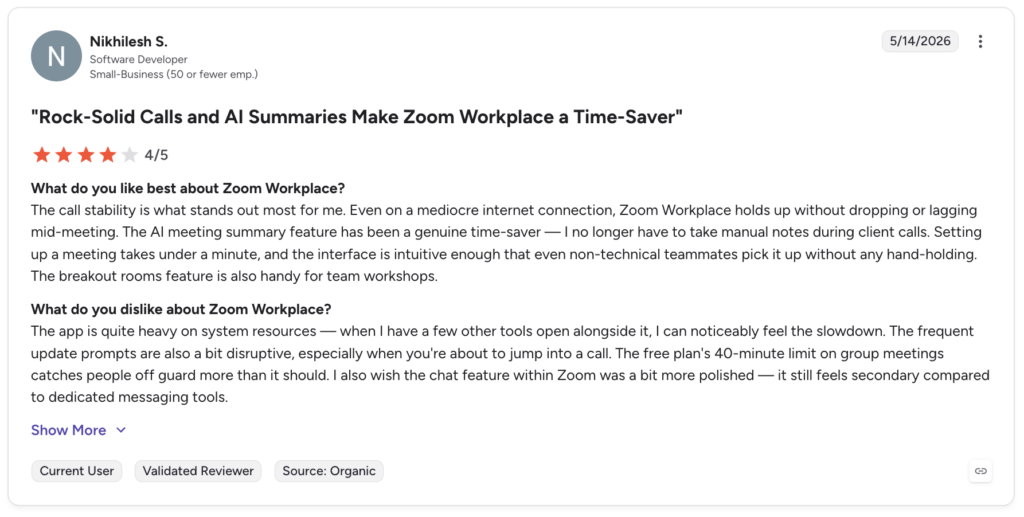
Zoom Phone is a cloud-based business phone system offered by Zoom Video Communications that allows users to manage calls on various devices, including desk phones, computers, and mobile phones.
What Are Zoom Phone's Key Features?
- Zoom Mobile and Desktop App
- Call recording and transcription
- Call transfer
- Call forwarding
What Are Zoom Phone's Plans & Pricing?
Zoom phone pricing starts at $16/user/month, offering three main plans:
- US & CA Unlimited ($16/user/month)
- Pro Plus ($20.50/user/month)
- Business Plus ($24.50/user/month)
Who Is Zoom Phone Best For?
Small businesses and those with limited budgets, especially teams already embedded in the Zoom ecosystem for meetings and messaging.
What Are Zoom Phone's Customers Saying?
5. Dialpad: Best for AI-Powered Communication
What Is Dialpad?
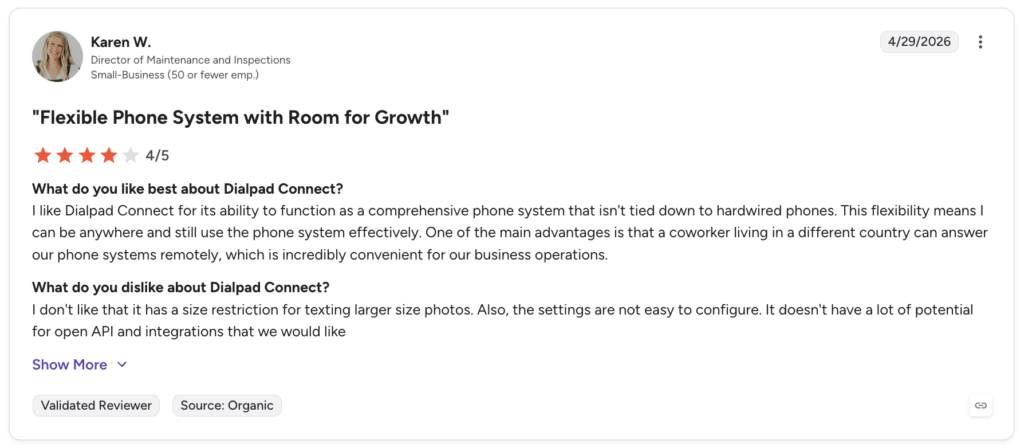
Since its inception in 2011, Dialpad has provided services to tens of thousands of business teams. It's a reliable, unified cloud-based calling solution with simple built-in AI and advanced analytics.
What Are Dialpad's Key Features?
- Call recording
- 24/7 customer support
- Call analysis
- Fully integrated caller ID
What Are Dialpad's Plans & Pricing?
Dialpad pricing starts at $15/user/month, offering three main plans:
- Standard Plan (from $15/user/month)
- Pro Plan (from $25/user/month)
- Enterprise (Quote-based)
Who Is Dialpad Best For?
Larger organizations and those with complex call center operations that want AI-powered voice intelligence and reliable uptime.
What Are Dialpad's Customers Saying?
6. 8x8: Best for Omnichannel Communication
What Is 8x8?
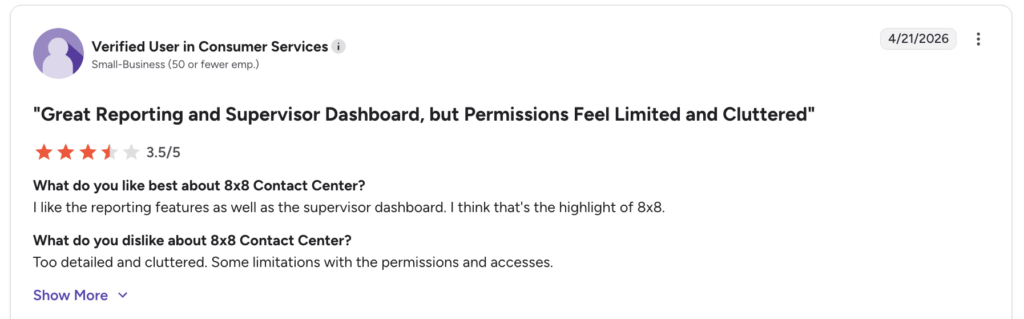
8x8 has provided cloud-based business communications and customer experience solutions since 1987. It offers a unified platform integrating contact center capabilities, voice, video, chat, and APIs. 8x8 is known for high-quality, budget-friendly VoIP services.
What Are 8x8's Key Features?
- AI-powered tools, such as automated call routing and voicemail-to-text transcription
- Video conferencing
- Omni-channel analytics
- Workforce engagement management
What Are 8x8's Plans & Pricing?
8x8 pricing is quote-based. Contact their sales team to get a custom package based on your business size and feature requirements.
Who Is 8x8 Best For?
Businesses of all sizes that need a unified omnichannel platform — particularly organizations requiring voice, video, and chat in a single interface.
What Are 8x8's Customers Saying?
7. Aircall: Best for Sales-Driven Teams
What Is Aircall?
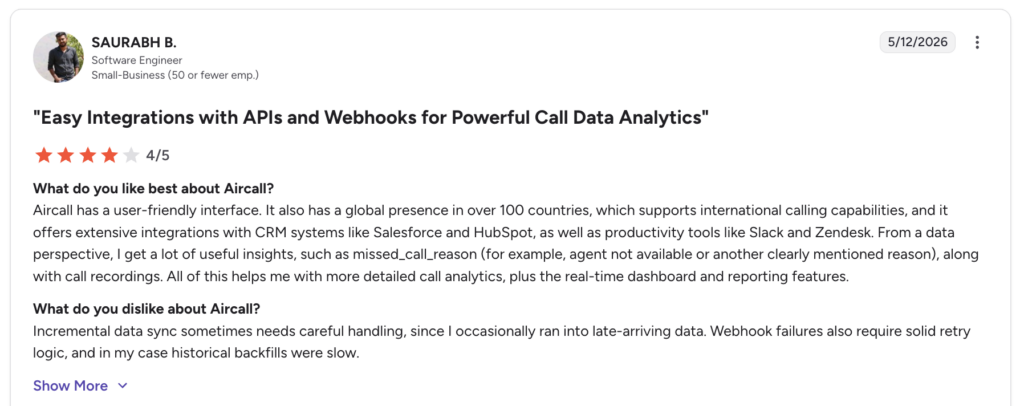
Aircall is an advanced calling solution used by 17,000+ clients. It's designed to speed up sales processes, boost communication with prospects, and close more deals. You can automatically dial multiple prospects in a back-to-back queue and surface crucial contact information directly within the phone interface.
What Are Aircall's Key Features?
- Automatic Call Distribution
- Call transfer
- Call recording
- Call monitoring
What Are Aircall's Plans & Pricing?
- Essentials ($30/license)
- Professional ($50/license)
- Custom (Quote-based)
Who Is Aircall Best For?
Small to medium-sized businesses — particularly sales teams that need fast setup, CRM sync, and automated outbound dialing.
What Are Aircall's Customers Saying?
8. Nextiva: Best for Healthcare and Professional Services
What Is Nextiva?
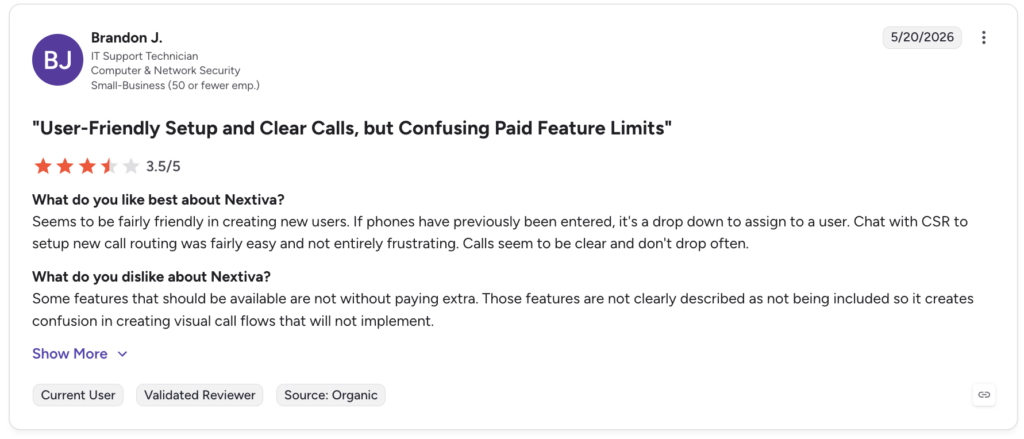
Nextiva is a big player in the VoIP market, providing services to more than 100,000 customers. It is widely regarded as user-friendly — users can start calling within minutes thanks to a simple and intuitive setup process. Furthermore, the system is hosted by Nextiva, which makes maintenance of the software Nextiva's responsibility.
What Are Nextiva's Key Features?
- Mobile & Desktop Apps
- Video Conference Recordings
- Workflow Optimization
- Unlimited Calling
What Are Nextiva's Plans & Pricing?
Nextiva pricing starts at $15/user/month, offering three main plans:
- Core (from $15/user/month)
- Engage (from $25/user/month)
- Power Suite CX (from $75/user/month)
Who Is Nextiva Best For?
Small to medium-sized businesses — particularly healthcare professionals and service firms that need virtual faxing, HIPAA-friendly features, and reliable 24/7 support.
What Are Nextiva's Customers Saying?
9. GoTo Connect: Best for IT and Support Teams With Scalable Needs
What Is GoTo Connect?
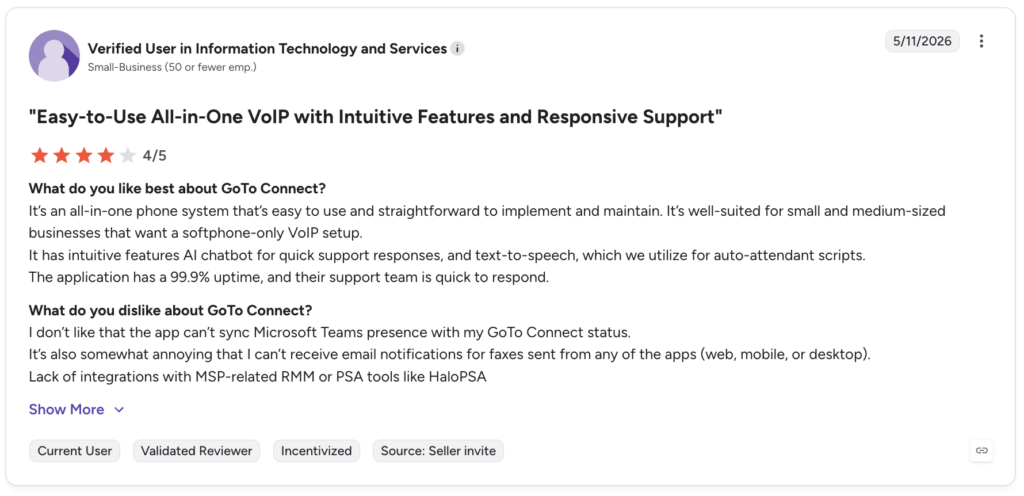
GoTo Connect is a cloud-based telephony solution known for its comprehensive features, scalability, and affordability. It combines voice, video, and messaging into one platform, offering customizable call routing, integration with popular business apps, and advanced video conferencing.
What Are GoTo Connect's Key Features?
- Unlimited call routing
- Multi-Level auto attendants
- Advanced reporting and analytics
- SMS functionality
What Are GoTo Connect's Plans & Pricing?
GoTo Connect pricing is quote-based. Contact their sales team for a tailored quote based on your organization's size and requirements.
Who Is GoTo Connect Best For?
Small to midsize businesses — particularly IT and support teams that need customizable call routing and a user-friendly admin panel.
What Are GoTo Connect's Customers Saying?
10. Grasshopper: Best for Solopreneurs and Small Businesses
What Is Grasshopper?
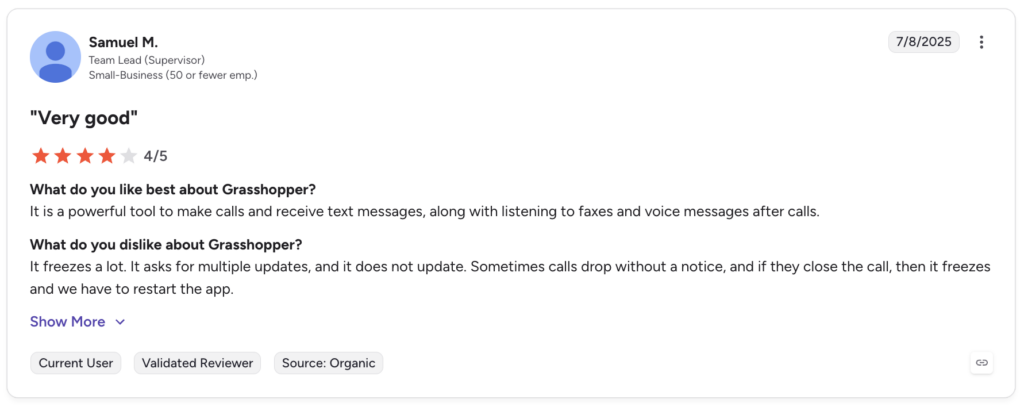
Grasshopper is a cloud-based telephony solution designed for small businesses. It allows users to make and receive calls, send and receive texts, and manage voicemail using a desktop or mobile app.
What Are Grasshopper's Key Features?
- Call forwarding to any device
- Voicemail Transcription
- Custom Greetings
- Simultaneous Call Handling
What Are Grasshopper's Plans & Pricing?
Grasshopper pricing starts at $14/user per month, offering three tiers:
- True Solo ($14/user per month)
- Solo Plus ($25/user per month)
- Small Businesses ($55/user per month)
Who Is Grasshopper Best For?
Small businesses and solopreneurs who need a lightweight, mobile-first phone presence without investing in new hardware or complex setup.
What Are Grasshopper's Customers Saying?
11. Google Voice: Best for Google Workspace Users on a Budget
What Is Google Voice?
Google Voice is a cloud-based telephony solution from Google Cloud that provides businesses of all sizes with a user-friendly and scalable way to manage phone communications. It offers a range of features and lets users make domestic and international calls, send SMS messages, and manage voicemail from web browsers and mobile devices.
What Are Google Voice's Key Features?
- Call forwarding
- Multi-Level auto attendant
- SMS and voicemail management
- Ring groups
What Are Google Voice's Plans & Pricing?
Google Voice pricing starts at $10/user/month and offers three plans:
- Starter ($10/user/month)
- Standard ($16/user/month)
- Premier ($24/user/month)
Who Is Google Voice Best For?
Small and medium-sized businesses already using Google Workspace that need a budget-friendly, easy-to-deploy calling solution for domestic use.
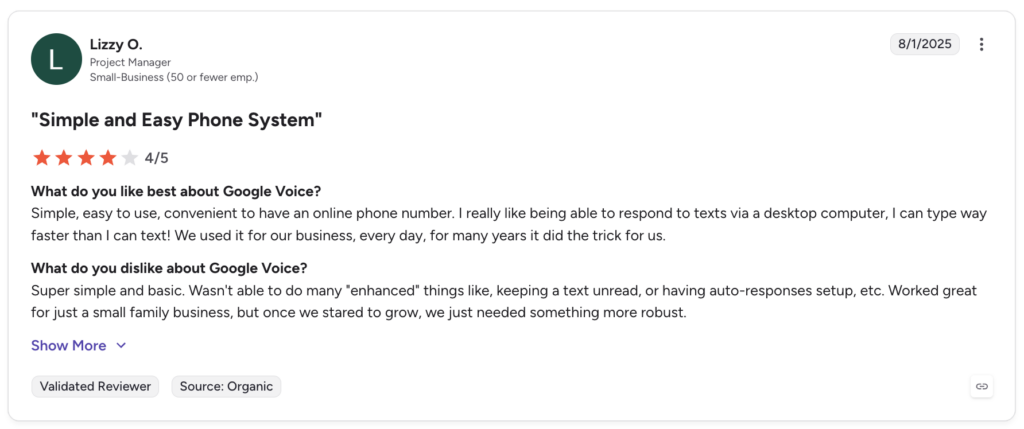
What Are Google Voice's Customers Saying?
Deep Dive: What the Best Cloud Phone Systems Offer in 2026
Choosing a cloud-based telephony platform isn't just about basic calling features — it's about how well the system supports your real-world operations, from international service delivery to AI routing and analytics. Here's how top solutions stack up on critical decision factors for today's distributed teams.
Built for International Teams
If your support or sales team spans time zones, you need more than basic coverage. CloudTalk, RingCentral, Nextiva, and 8x8 are standout options in 2026 for international customer support, offering local numbers, toll-free access, and stable call quality across continents.
From On-Premise to AI-Powered Routing
Migrating from a legacy system? CloudTalk, RingCentral, and Nextiva allow you to port your existing on-premise numbers into the cloud and immediately benefit from smart call routing. These tools automatically direct calls based on skills, business hours, or caller intent — no manual switching required.
IVR Flexibility: Zoom Phone vs. the Field
Zoom Phone delivers strong IVR and auto-attendant features, especially for teams already using Zoom for meetings and messaging. However, for deeper customization and broader global reach, alternatives like CloudTalk provide more flexible options.
Real-Time Analytics for Remote Teams
Top platforms like CloudTalk and Nextiva offer robust real-time dashboards, customizable KPIs, and AI insights — giving remote managers full visibility into team performance, call quality, and customer interactions.
Workflow Automation Out of the Box
Looking to save time on follow-ups and admin tasks? CloudTalk leads with ready-made workflow automations — handling actions like follow-ups, CRM logging, ticket creation, and routing without manual input.
Try Before You Commit
Need to test global capabilities risk-free? CloudTalk offers a 14-day free trial — no credit card required. You get full access to the platform's features, including international numbers, analytics, integrations, and smart routing.
Superior Voice Quality with Toll-Free Numbers
Crystal-clear calls start with infrastructure. Providers like CloudTalk combine toll-free (800) number availability with global server load-balancing, ensuring consistent quality even during peak hours.
Best Value by Business Size
- Small Businesses: CloudTalk stands out for affordability and usability.
- Mid-Market & Enterprise: RingCentral and 8x8 lead with extensive features, high scalability, and deep integrations.
Migrating from Legacy PBX: 6 Key Steps
Thinking about switching to the cloud? Follow these steps for a smooth transition:
- Audit your current phone system and usage.
- Choose a cloud provider that fits your needs.
- Port your numbers to the new platform.
- Train your staff and set permissions.
- Integrate CRMs, helpdesks, and workflows.
- Test call flows and system reliability before full rollout.
How to Choose the Right Cloud-Based Telephony Solution
With so many choices out there, picking the right cloud telephony solution can feel overwhelming. Consider these key aspects, and you'll find the perfect fit for your business:
- Integration capabilities: Check if the provider offers seamless integrations with your existing workflow tools and popular CRMs.
- Cost: Review the pricing plans of the different providers to find the one that aligns with your budget. Look for providers that offer scalable programs and reasonable discounts for long-term contracts.
- Reliability and uptime: Analyze the provider's reputation and customer testimonials to ensure uptime and minimal downtime. Ensure the provider's infrastructure is reliable and that they perform regular maintenance.
- Security: Choose a provider that offers robust data security measures to prevent data breaches, such as top-notch call encryption for extra security.
- Compliance: Ensure that the provider complies with industry regulations such as STIR/SHAKEN and MAN.
- Support: Evaluate how good the provider's customer service is, especially when it comes to fixing problems and answering technical questions. Verify if the provider offers continuous support and maintenance to minimize downtime.
Essential Integrations and Analytics Capabilities
A powerful cloud phone system should integrate with your existing tools and offer analytics that help you improve performance, customer experience, and decision-making. Here's what to prioritize:
- CRM integration: Sync with systems like Salesforce or HubSpot to access customer data during calls and log interactions automatically.
- Helpdesk integration: Connect with platforms like Zendesk to give support teams full context and resolve issues faster.
- Call tracking and recording: Monitor call volume, length, and trends. Use recordings to support training, compliance, and quality assurance.
- Real-time reporting: Access live dashboards with performance metrics like call volume, wait times, and agent activity for immediate insights.
- Performance management: Track agent KPIs to evaluate productivity, reward top performers, and tailor coaching programs.
- Data-driven decision making: Leverage call data to inform staffing, resource planning, and strategic decisions across departments.
Security and Reliability of Cloud-Based Telephony Systems
Cloud-based phone systems offer stronger protection and more dependable uptime than traditional setups:
- Enhanced security features: Cloud providers safeguard calls and data using advanced security measures such as encryption, multi-factor authentication, and intrusion detection systems.
- Reduced risk of data breaches: With expert-managed infrastructure, cloud systems offer better protection against cyber threats than many on-premise setups.
- Compliance with regulations: Many providers meet standards like HIPAA or GDPR, ensuring your communication data stays legally protected and secure.
- Redundant infrastructure: Cloud systems run on servers in multiple locations, reducing the risk of downtime due to hardware failure or local outages.
- Automatic backups: Providers typically perform regular, automated backups to keep data safe and recoverable at any time.
Conclusion
As you explore the top cloud-based telephony solutions, remember that each option offers unique features and benefits tailored to various business needs.
Whether you're aiming to boost sales, enhance customer satisfaction, or streamline internal communications, there's an option for you.
By carefully evaluating factors such as integration capabilities, pricing, and reliability, you can find the solution that best aligns with your business needs and preferences.
Ready to see CloudTalk in action? Request a demo today.
Cloud telephony is a phone system that operates over the internet rather than traditional phone lines or on-premise hardware. It enables businesses to make and receive calls from any device— laptop, desktop, or mobile— sing a provider-hosted infrastructure. Because everything runs in the cloud, businesses benefit from lower costs, instant scalability, and built-in features like call recording, analytics, and CRM integrations.
Common examples of cloud telephony include CloudTalk, RingCentral, Dialpad, Zoom Phone, and Google Voice. These platforms replace traditional desk phones and PBX hardware with internet-based calling, offering features like IVR, call routing, voicemail-to-email, and real-time analytics — all managed through a web dashboard.
The best cloud telephony providers in 2026 include CloudTalk, RingCentral, Dialpad, Nextiva, and Zoom Phone. CloudTalk is the top-rated option for growing sales and support teams that need AI dialing, global number coverage, and deep CRM integrations. RingCentral and 8x8 lead for enterprise-scale deployments requiring advanced UCaaS features.
Traditional PBX systems require on-site hardware, dedicated IT staff, and significant upfront investment. Cloud telephony, by contrast, is hosted and maintained by a third-party provider and accessed entirely over the internet. This eliminates hardware costs, enables remote work, and gives businesses instant access to advanced features like AI routing, sentiment analysis, and real-time analytics — all on a predictable monthly subscription.
CloudTalk offers native two-way integrations with both HubSpot and Salesforce, automatically syncing call data, contact records, and activity logs without manual input. RingCentral, Dialpad, and Nextiva also support both CRMs, though the depth of integration varies by platform and pricing tier.
CloudTalk is the top-rated cloud telephony provider for both sales and support teams in 2026, thanks to its AI Sales Dialer, real-time analytics, and deep CRM integrations with HubSpot, Salesforce, and Pipedrive. Aircall is a strong alternative for sales-driven teams needing fast setup, while Nextiva stands out for customer support teams in healthcare and professional services.
Real-world examples include CloudTalk (used by sales and support teams for AI-powered outbound calling and CRM automation), RingCentral (deployed by enterprises for unified voice, video, and messaging), Zoom Phone (used by small teams already relying on Zoom for collaboration), and Google Voice (adopted by Google Workspace businesses for basic call management). Each solves a specific business communication need — from high-volume outbound dialing to simple virtual phone presence.
CloudTalk leads for intelligent call routing with its Call Flow Designer, offering 20+ routing options including skill-based routing, caller-based routing, and time-based rules. RingCentral and GoTo Connect also offer robust multi-level routing and auto-attendant configurations suited for larger teams with complex call distribution needs.
VoIP enables voice calls over the internet, and cloud telephony includes more phone services hosted online. VoIP is a specific technology for internet-based calls, while cloud telephony includes additional features like call routing, analytics, IVR, and CRM integrations.
A cloud phone service does not work directly on landlines. Instead, it uses the internet to convert analog voice signals into digital data and transmit them over the internet. This means that a cloud phone system can be used through various devices such as VoIP phones, mobile phones, or computers, but it does not rely on traditional landline infrastructure.
Yes, a cloud phone service works on mobile phones. Cloud-based telephony systems are designed to be accessible over the internet, meaning that users can make and receive calls using various devices, including mobile phones, traditional desk phones, and computers.
It depends on your needs, but CloudTalk is the best cloud telephony solution for growing teams and small businesses seeking scalability, analytics, and global coverage.
CloudTalk leads for SMBs with AI dialing and global numbers. Zoom Phone and Grasshopper also shine for budget-friendly, easy setup.
CloudTalk enables remote teams with 24/7 access and CRM sync. RingCentral and Dialpad support mobile-first, distributed workflows.
CloudTalk offers global coverage and local numbers, including in Germany. RingCentral is also strong for large, multi-site operations.
CloudTalk supports toll-free, mobile, and local numbers in 160+ countries. Vonage and Nextiva also include toll-free options.
CloudTalk ensures secure, GDPR-compliant calling. Nextiva and RingCentral also offer strong encryption and data protection.
CloudTalk leads with number porting and advanced AI call flow tools. Dialpad also offers AI-powered routing.
CloudTalk, RingCentral, and Dialpad top the list for innovation, G2 ratings, and feature depth across sales and support use cases.